Friday, November 15, 2013

SFA News - AIA Pennsylvania Firm Award


Spillman Farmer Architects is proud to announce that the American Institute of Architects Pennsylvania Chapter has selected our firm to receive the 2013 Architectural Firm Award. This was the inaugural year for the award, which honors an architectural firm that has consistently demonstrated a commitment to design excellence and has made outstanding contributions to the profession of architecture for a period of at least 10 years.
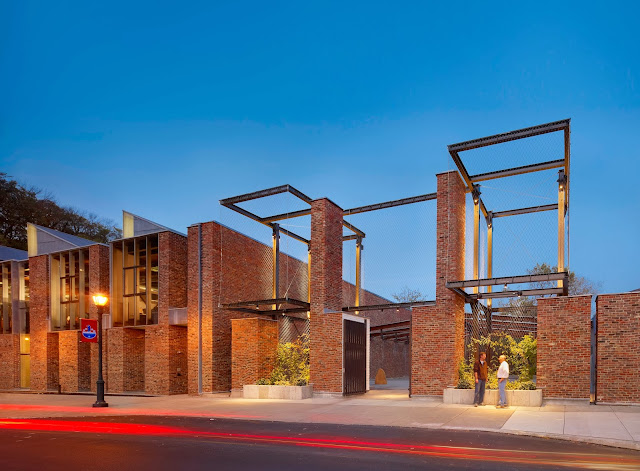
Lafayette College Arts Plaza, AIA Pennsylvania Citation of Merit 2013

“Winning the first AIA Pennsylvania Firm Award is truly an honor.  We feel privileged to practice architecture, a profession that we love and which allows us to positively impact the lives of those who work, live, learn and play in the buildings we have designed since 1927,” said Daniel Harrigan, AIA, Spillman Farmer President and one of the firm’s six principals. 


ArtsQuest Center, AIA Pennsylvania Silver Medal 2012

The AIA Pennsylvania Board of Directors served as the jury for this year’s Architectural Firm Award. The Board, representing firms from each AIA Pennsylvania branch chapter, reviewed more than 20 entries before selecting Spillman Farmer Architects.


 Northampton County Historical and Genealogical Society Sigal Museum, AIA Pennsylvania Award of Merit 2011


“[Spillman Farmer’s] body of work represents an imaginative approach to difficult problems, a curiosity about materials, and a strong sense of purpose,” said Jules Dingle, AIA, Awards Chairman for the AIA Pennsylvania and Principal of DIGSAU.  “The thoughtful presentation of their work conveyed a commitment to the value of architecture as a profession, an understanding of the challenges facing contemporary practice, a long history of design excellence, and a palpable ambition to achieve even greater success in the future.”


 Bryn Athyn College Doering Center for Science, AIA Pennsylvania Award of Merit 2011

Friday, October 4, 2013

SFA News - Muhlenberg East Hall Phase 1


SFA worked with Muhlenberg College to repurpose East Hall into a memorable and meaningful living/learning environment for students. East Hall includes warm, inviting interiors with thoughtful historic detailing that respects the original architecture. Large and small social spaces foster a sense of community, and are located strategically to minimize circulation zones and provide visual and physical connectivity to the greater campus.


The project was a collaboration with The Whiting-Turner Contracting Company and NRB-USA. East Hall deploys both off-site and pre-fabricated construction strategies. This system of construction minimizes site disruption and shortens construction time. Fabricating the addition in this way allows for a timely juxtaposition of construction methods. Ultimately, the building respects its early 20th century fabric while exploiting a 21st-century construction model. This time lapse shows construction progress from May 20-August 14, 2013. As you'll see, the entire new construction portion of the project was completed during this time. Students moved in to the East Hall addition and into a renovated portion of the existing building at the start of Muhlenberg's academic semester on August 15th.


Though the building is over a century old, SFA's renovations and additions modernize East Hall into a desirable residence hall for Muhlenberg students. Through multiple programming sessions and design alternatives, SFA's interventions are transforming the hall with a delicate hand.


YouTube Video Footage courtesy of Robert Mahar.
Initial Photograph by Matt Wargo.

Wednesday, September 18, 2013

Living in the Brownfield - Carbon Copy


 Mies Van der Rohe
"Glass Skyscraper,Project, Elevation Study"
1922 - MOMA
The ability to sketch an idea is a timeless conceit in architecture. The best sketches amplify initial thoughts about a concept, while capturing and communicating thinking with clarity. In 1922, Mies Van der Rohe sketched his “Glass Skyscraper,Project, Elevation Study”.  The bold power of his original image hints at ideas that would emerge throughout his career. Simple charcoal marks, in a context, represent Mies’ vision of a specific architecture.

The images that follow are a foray into a new type of architectural sketching. Through my ongoing exploration of iPhoneography and conversations about architectural representation with Pico|Little Architecture designer Andrea Panico, I began to explore the ways that traditional architectural communication could be translated to a new media.


"Carbon Copy" - 2013

Carbon Copy, borrowing a conceit from Bertjan Pot’s study of the Eames fiberglass DSR chair, is a sketch using contextual marks or “samples” as the starting point. The image conveys an architectural concept with mobile technologies.  The initial sketch was a carbon copy in the literal sense; a copy of a charcoal image, quickly cut and pasted while glancing at the original image.
A Proposal for a Wood Skyscraper emerged from this study.  “Bennachie Tower” proposes a personal vision of a wood and glass tower, using the same techniques that yielded Carbon Copy. Both images are hybrid photograph, drawing and collage.

"Bennachie Tower" - 2013

Bennachie Tower, utilizes a photographic “sample” of Scotland’s Bennachie Forest from artist Kathryn Brown. Bennachie Forest criticizes the traditional skyscraper renderings (often showing trees growing from setbacks and other improbable details) which were flooding the media at that time.  The image suggests a provocative use of context, detail, and technology to create a sketch, and ultimately, the concept of using a mobile device as a sketchbook.  The result is a collage of pixels: each replicating charcoal, context, detail, and true “context”. These collaged pixels are applied as marks, indicative of specific architectural context.


"Cut and Paste" - 2013

I was compelled to share these studies on Speaking of Architecture after a visit to the Museum of Modern Art this summer. “Cut ‘n’ Paste: From Architectural Assemblage to Collage City” is a small but powerful show that examines “early uses of collage to trace its evolution as both an aesthetic technique central to architectural representation and a cultural practice of layering, juxtaposition, and remix that configures the city.” The exhibit was curated by MoMA’s Pedro Gadanho and assistant Phoebe Springstubb. Don’t miss this exhibit! It runs through December 10, 2013.


Tuesday, August 13, 2013

Material Process Product - Thread Count

The Thread Paintings of Emil Lukas


Our architecture is a material-based approach to design. Personally, I am passionate about materials, and I believe a refined palette of authentic materials is an essential design tool. Further, I believe a disregard for materials and their methods of assembly results in built projects that lack the rich human experience that this type of expression can provide, and are, as a result, less successful.


Having grown up in the garment industry, I have a deep appreciation for the process of making. These open factories were rife with the infinite colors, textures, and patterns that influence our practice to this day. Spools of thread, dust in the air, rolls of fabric, and the sounds of humming machinery all shaped my experience. Over the years of practice, I’ve become particularly interested in the ways that architectural parlance intersects with the jargon of the garment industry. As architects, we refer to “urban fabric” on a daily basis, noting the ways that the intricacies of urban life mimic the interwoven threads of material. I’ve also come to think of some structural system as “threads”—materials that bind together disparate pieces of building into a common system.


As someone preoccupied with these lines of thinking, I’m particularly intrigued with the work of Emil Lukas, whose art stems from similar sensibilities about material. His “thread paintings” elevate common thread (which is both humble and highly accessible) into layered, dynamic pieces. The paintings, which convey a straightforward simplicity at first glance, reveal a deliberate, complex depth upon closer observation. Each of his threads, stretched over a simple frame, works to create an atmosphere of lightness and form. Together, they create a three-dimensional projection that grabs the viewer from within. As with most buildings, Lukas’s paintings are symphonies in many parts: simple elements come together to create a composition that’s much greater than the sum of their parts.


All images via Emil Lukas
emillukas.com

Wednesday, June 26, 2013

Great Heights in Higher Education - Diversity on Campus


Spillman Farmer Architects - Numen Lumen Center at Elon University - Jim Sink Photography - Speaking of Architecture - Diversity on Campus
Numen Lumen Center at Elon University - Jim Sink Photography

SFA is proud to announce that we recently completed work at Elon University’s Numen Lumen Center, the Multifaith Center on campus. “Numen Lumen,” in addition to being the University’s motto, is a symbol of spiritual and intellectual light for students on campus. The Multifaith Center aims to create a welcoming atmosphere for students of many faiths, and to attract a diverse body of students to a central meeting place. The Center’s location in Elon’s Academic Village is important, as it anchors a major living/learning community in the heart of campus.

The Numen Lumen Center was a collaborative effort for Spillman Farmer Architects and Newman Architects of New Haven, CT. Major features include a two-story skylit worship space and a larger room that can be used as a banquet area or auditorium. Because of the religious nature of the building, special concerns such as ablution rooms, kosher kitchens, prayer rooms, and icon storage were all incorporated into the building. Special care was also taken to create a reverent, calm environment within the building: a water wall and an outdoor meditation garden help to ensure this environment.

Spillman Farmer Architects - Numen Lumen Center at Elon University - Speaking of Architecture - Diversity on Campus
Numen Lumen Center at Elon University - Spillman Farmer Architects


Pedagogically, the Multifaith Center is crucial to Elon’s efforts to create an open, accepting, and diverse atmosphere on campus. The Center allows students to practice and learn about the faiths represented at Elon. As a university, Elon hopes that the Center will promote peace and understanding among students.

Spillman Farmer Architects - Numen Lumen Center at Elon University - Jim Sink Photography - Speaking of Architecture - Diversity on Campus
Numen Lumen Center at Elon University - Jim Sink Photography
Read more about the Numen Lumen Center and Elon University:

Services at Numen Lumen
Elon University

Friday, May 31, 2013

Living in the Brownfield - Jessica Bandy | Bethlehem, USA


“A quiet town in eastern Pennsylvania, Bethlehem was headquarters of the Bethlehem Steel Corporation, a 96-year-old company that provided steel for the nation, from the Empire State Building to the Golden Gate Bridge. In 1995, it ceased production and in 2001, it declared bankruptcy. While parts of the vast complex remain abandoned, service industries are moving in, and the site has become a tourist destination. Jessica Bandy examines the life cycle of Bethlehem from different generational points of view.” Excerpt from the School of the Visual Arts website


We had the pleasure of hosting Jessica Bandy numerous times throughout the last year as she gathered the raw material for her thesis project in the “lens arts” program of the School of the Visual Arts (SVA).  We’re thrilled to see the screening announced and hope that you’ll support the arts and the artist by spreading the word about this great project. I have not seen all of the images and video, but I do know that Bob Spillman and my dad, Bill Deegan, had cameo’s and got to tell their stories about life in and around the Bethlehem Steel Plant. 
 

Great working with you Jessica, congrats on the project and the MFA – Bill.
all images copyright Jessica Bandy

Wednesday, April 24, 2013

Material Process Product - The Art of Revitalization

I recently had the pleasure of taking part in a panel discussion on revitalization through arts and culture at the National Building Museum in Washington D.C. The panel was quite diverse, consisting of Pittsburgh Cultural Trust’s Kevin McMahon, Powerhouse Production’s Gina Reichert, and myself (Joseph N. Biondo of Spillman Farmer Architects). The program focused on the rebirth of industrial cities like Pittsburgh, Detroit and the Lehigh Valley. I became particularly intrigued by the work Powerhouse Productions is doing in Detroit neighborhoods: as part of their mission, they allow national artists to transform abandoned homes into interactive objects of art.

Image courtesy of Powerhouse Productions

Many communities throughout our country have flourished through smart redevelopment and introduction of the arts. The SoHo region of lower Manhattan is a particularly strong example. A variety of factors in SoHo transformed a “low road,” dead part of an American city into a more dynamic, more diverse, and economically stronger community.

The acronym SoHo was part of a clever branding strategy which refers to an area south of Houston Street. This region was the heart of manufacturing in New York in the early 1900’s. By the 1950’s, many of the manufacturing facilities began to outgrow their lofts and started to relocate west, out of Manhattan. The area south of Houston Street became a castaway void between Midtown and Wall Street; a district of “low road” buildings that became too unsafe to visit. The area’s lack of diverse uses (caused, in part, by a lack of planning foresight) killed the urban life of this once-vibrant district.
 
Juxtapoz  House on Morgan Street Courtesy of Powerhouse Productions
Eventually, New York city planners looked to gentrify the area, while grassroots urban pioneers began to occupy it. Megastructures and major thoroughfares were proposed, but a burgeoning population of artists began to squat in the neighborhood’s structures. SoHo’s rebirth was attributed not to city planners, but to the artists whose urban pioneering spirit and modest necessity stimulated the renewal.
 
Sound House Courtesy of Powerhouse Productions
The similarities in Detroit’s neighborhoods (although currently underway) present an incredible potential for rebirth. Like SoHo, Detroit's residents want to feel part of a true neighborhood – an authentic, unique village atmosphere that provides history, a sense of place, and a spirit of belonging. This type of neighborhood, where safety, interaction, lively streets and unexpected delight occur, must attract the same kind of creative class that was drawn to SoHo in the 1960’s. To remain vital, cities like these need to be creative and innovative, both intellectually, culturally and technologically. Hats off to Detroit!